
URWERK Unveils Massive $65,000 SpaceTime Blade Clock Sculpture
URWERK unveiled the SpaceTime Blade as a limited edition of 33 pieces.
Komplication Team
4/4/20242 min read
Independent watchmaker URWERK has launched an ambitious new timekeeping creation - the SpaceTime Blade. This limited edition of 33 pieces is a departure from traditional watchmaking, taking the form of a enormous 1.7 meter (5.6 foot) tall sculpture weighing 20 kilograms (44 pounds).
The glass Nixie tubes were hand-blown by artisans in the Czech Republic's renowned "Crystal Valley" region. Each one contains 88 individual components painstakingly assembled using tweezers. URWERK collaborated with specialist Dalibor Farny, whose company has provided Nixie tubes for NASA projects.
Underneath the SpaceTime Blade's glass dome is an oversized bronze base created using the lost-wax casting method by Czech artisan Mr. Lukuvka. It features a black patina finish.
With a price of 55,000 Swiss francs ($65,000 USD), the SpaceTime Blade is clearly aimed at a rarefied clientele of horological enthusiasts and art collectors. URWERK says it melds scientific instrument aesthetics with science fiction influences in this unconventional clock sculpture.
The independent brand based in Geneva produces around 150 avant-garde timepieces per year adhering to strict haute horlogerie standards of research, materials, and hand-finishing. The SpaceTime Blade represents an ambitious fusion of traditional arts with modern technology.
Photos: urwerk.com
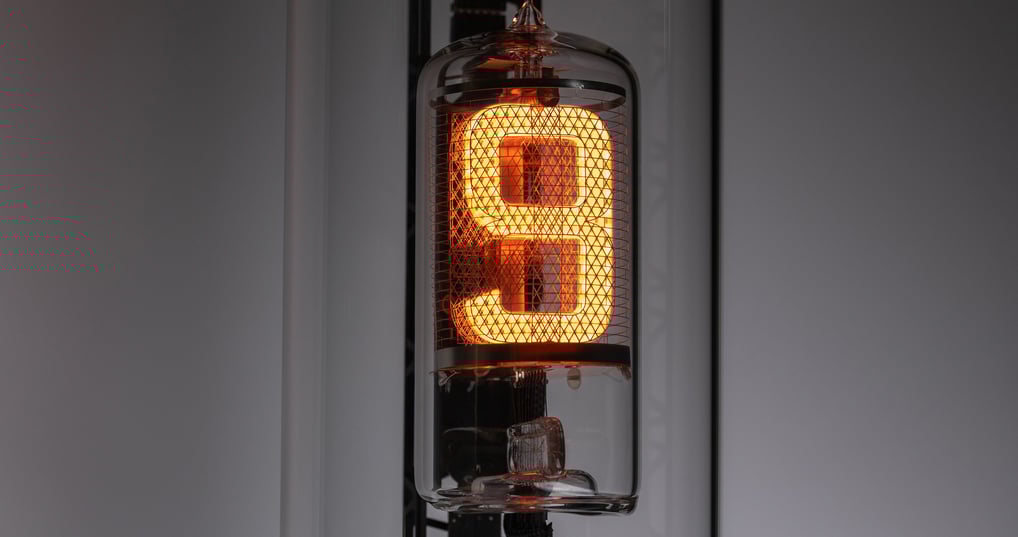
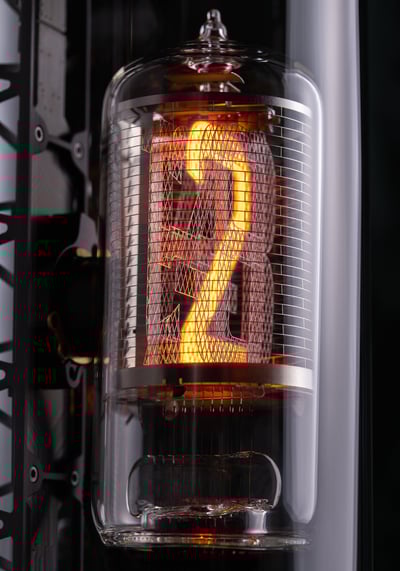
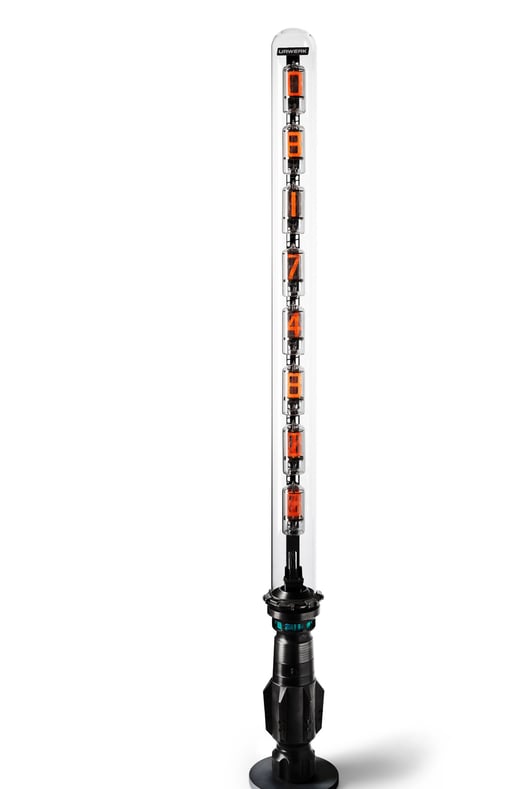
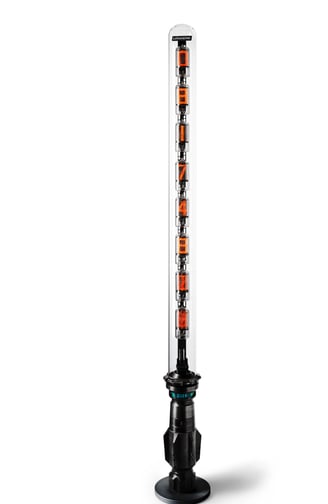
Rather than a conventional clock face, the SpaceTime Blade features eight vertically stacked Nixie tube displays. These vintage-inspired glass bulbs contain wire mesh cathodes shaped into numerical digits which glow orange when electrically charged
The Nixie bulbs can display several different timekeeping and distance calculations selected via a dedicated remote control. Settings include standard time readouts of hours, minutes, seconds as well as more unconventional displays showing the Earth's daily rotation expressed in kilometers traveled at the equator. Another mode indicates the distance the Earth travels in its yearly revolution around the Sun.